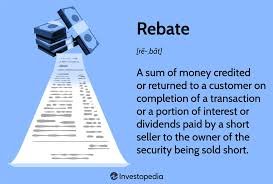
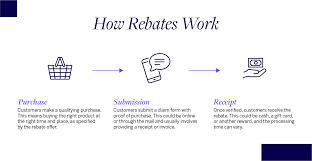
A rebate lets you get part of your money back after you buy a product or service. You pay the full price at checkout, then send in proof that you bought the item. After the company verifies your claim, it sends you the rebate payment.
This makes the cost lower in the end, but you have to do extra steps to get it. A rebate is not the same as a discount. A discount lowers the price before or at the time of purchase.
A rebate pays money to you after the sale is complete.
What Is a Rebate
A rebate is a partial refund of the purchase price that you receive after the sale is complete. You must follow the rebate terms and submit the required materials to qualify for payment.
Rebates are widely used by manufacturers and retailers as a sales promotion. Many people pay full price upfront and then claim the rebate later.
How Do You Claim a Rebate
To claim a rebate, you will typically need to do several things:
- Keep your original receipt. This must show the date, price, and the product you bought.
- Complete the rebate form. The form may be included inside the product box or available online.
- Include required proof of purchase. This can include the Universal Product Code (UPC) cut from the product packaging, and sometimes a serial number from the item itself.
- Submit your materials. Some rebates let you upload digital photos or scans at an online claim portal. Other rebates require that you mail in your forms and proof by the deadline.
Every rebate offer clearly states what documents are needed and how to submit them. If you miss any required item or miss the deadline, your claim may be denied.
What Happens After You Submit a Rebate Claim
Once you submit your claim, the rebate processor reviews your materials and checks that everything is correct. This includes verifying that:
- You bought the right product.
- The purchase was made during the promotional period.
- All required documents were included and readable.
Many companies use third‑party rebate processors to handle these checks. Processing usually takes six to twelve weeks after the company receives your complete claim.
You may receive the rebate as a check, a prepaid rebate card, or direct deposit, depending on the offer.
When Will I Get My Rebate Payment
Rebate offers usually list an estimated payment timeline. In most cases, companies provide the date range on the rebate form or online offer.
If no timeline is listed, federal guidance for consumer promotions suggests that the rebate must be delivered within 30 days after the company receives your documentation unless a longer period is clearly stated.
Typical processing times are:
- 6 to 12 weeks after submission for most claims.
- Some rebates take longer if additional verification is required.
- Instant rebates are applied at checkout and do not require a post‑purchase process.
How Do You Track Your Rebate
Many manufacturers and retailers provide a rebate tracking tool. After you submit your claim, you usually receive a confirmation number or tracking code.
You can use this code to check the status of your rebate on the company’s rebate tracking website. Some programs also let you use your email address or last name to find your claim status.
Tracking tools show whether your claim has been received, approved, or processed for payment.
If you submitted by mail, allow additional time for the rebate center to receive your package before tracking shows progress.
What If My Rebate Is Denied or Takes Too Long
If your rebate claim is denied or delayed beyond the stated timeline:
- Check the rejection notice for reasons. You may be able to resubmit corrected documents within a set window.
- Contact the rebate processor or manufacturer with your tracking number and documentation.
- If the offer was misleading or the company fails to honor the rebate, you can file a complaint with the Federal Trade Commission.
If a company consistently fails to pay rebates or misleads consumers about terms, it may face enforcement actions under federal consumer protection laws.
When Does a Rebate Become Taxable
Most consumer rebates tied directly to a purchase are not taxable income. The Internal Revenue Service treats these payments as a reduction in the amount you paid for the item rather than income you earned. This means you do not report typical purchase rebates as income on your tax return.
However, payments that are not tied to a specific purchase such as cash‑back bonuses or incentive payments from banks may be treated differently for tax purposes.
Always consult the Internal Revenue Service for guidance on your specific situation.
How Rebates Differ From Refunds
A rebate is different from a refund. A refund typically happens when you return an item because you do not want it or it is defective. In that case, you get your full money back and you do not keep the item.
A rebate lets you keep the item but get part of the purchase price back later.